Why Banning Things Makes People Want Them More

Why Banning Things Makes People Want Them More
Illusory Superiority: Why You Think You're Above Average

Status Quo Bias: Why Your Brain Fears Change

The Waiter Rule: Psychology of How You Treat Servers

Cheerleader Effect: Why You Look Better in Group Photos

Why We're Bad at Predicting Happiness: Focusing Illusion
TL;DR: Action bias is our deep-rooted tendency to favor doing something over doing nothing, even when inaction produces better results. From goalkeepers who dive unnecessarily to doctors who overtreat and investors who overtrade, this cognitive bias costs lives and fortunes. Learning to recognize it is the first step toward better decisions.
The next time you feel that itch to act, to fix, to intervene, to just do something, consider this: your instinct is probably wrong. Not always, but far more often than you'd think. Across medicine, investing, sports, management, and politics, researchers have spent decades documenting a phenomenon called action bias, and the evidence is clear. Our compulsion to act is one of the most expensive cognitive errors humans make. The good news? Once you see it, you can't unsee it. And that changes everything.
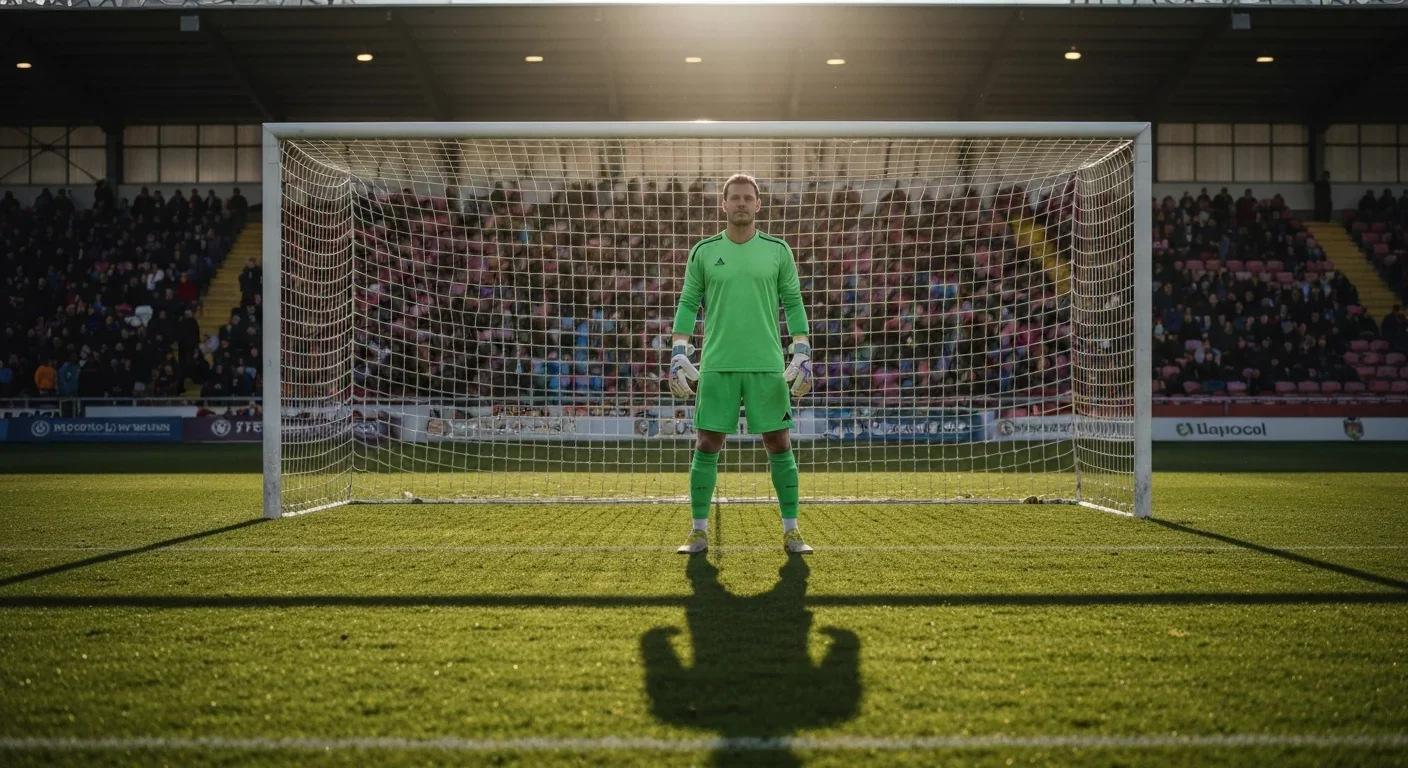
In 2007, a team of researchers led by Michael Bar-Eli published a study that would become one of behavioral science's most cited examples. They analyzed 286 penalty kicks in professional soccer and found something remarkable: goalkeepers dove left or right on roughly 94% of all penalty kicks. They stayed in the center only about 6.3% of the time.
Here's the problem. Roughly a third of penalty kicks go straight down the middle. Staying in the center actually gives goalkeepers the highest probability of making a save. So why do they dive? Because standing still while a ball rockets past you feels terrible. Diving and missing feels like bad luck. Standing still and missing feels like you didn't try.
When researchers surveyed goalkeepers about this, many acknowledged they'd have a better statistical chance by staying put. They dove anyway. The social and emotional cost of visible inaction was simply too high.
Goalkeepers dive on 94% of penalty kicks, yet standing still gives them the best statistical chance of making a save. They dive because inaction feels worse than failure.
This wasn't just a sports curiosity. Bar-Eli and his colleagues had identified something fundamental about how humans make decisions under pressure. They'd given it a name that would reshape how we think about everything from healthcare to finance: action bias.
The phrase "don't just stand there, do something" isn't just a cultural catchphrase. It's practically a survival mandate baked into our psychology over millions of years.
For most of human evolutionary history, action was the safer bet. Hear a rustling in the bushes? Better to run than to stand still and get eaten. See a predator approaching? Freeze and you die. Our ancestors who defaulted to action survived more often than those who paused to deliberate. Natural selection, in other words, built us to move first and think second.
This made perfect sense on the savanna. The problem is that we're still running on that same neural hardware in a world where most of our decisions don't involve predators. When a doctor faces a borderline test result, when an investor watches their portfolio dip 3%, when a new CEO feels pressure to make their mark, the ancient alarm system fires the same way. Do something. Anything. Now.

Daniel Kahneman's framework of System 1 and System 2 thinking helps explain the mechanism. System 1 is fast, automatic, and emotional. It's the part that makes you flinch when a ball flies toward your face. System 2 is slow, deliberate, and analytical. It's the part that does your taxes. Action bias is essentially System 1 hijacking decisions that System 2 should be handling.
Modern culture pours gasoline on this evolutionary fire. Western societies in particular celebrate decisiveness and visible productivity. Amazon famously lists "Bias for Action" as one of its 14 Leadership Principles, explicitly rewarding employees who prioritize speed over contemplation. Business books lionize executives who "move fast and break things." Political leaders who pause to gather information get labeled as weak or indecisive. The message is everywhere: action equals competence.
Nowhere is action bias more dangerous than in medicine.
Doctors face enormous pressure to act. Patients expect treatments, insurance companies expect procedures, and the ever-present fear of malpractice lawsuits creates a powerful incentive to do more rather than less. If a doctor prescribes a treatment and the patient gets worse, that's medicine being imperfect. If a doctor recommends waiting and the patient gets worse, that's negligence, or at least it feels that way.
The consequences are staggering. Research shows that action bias in medicine leads to overdiagnosis, overtreatment, and unnecessary surgical interventions that cause measurable harm to patients. Financial conflicts of interest compound the problem. When pharmaceutical companies and medical device manufacturers have financial ties to physicians, it creates systemic pressure toward overutilization of tests and procedures that aren't medically necessary.

Prostate cancer offers one of the most compelling case studies. For decades, the default response to a prostate cancer diagnosis was aggressive treatment: surgery, radiation, or both. But research has increasingly shown that for many men with low-risk prostate cancer, active surveillance produces outcomes comparable to immediate treatment, with far fewer side effects. Active surveillance involves regular monitoring through PSA tests, biopsies, and MRIs, intervening only if the cancer shows signs of progression.
The concept of "watchful waiting" has been shown to produce equivalent or better outcomes for certain conditions. Yet many patients and doctors still struggle with it. The psychological weight of knowing you have cancer and choosing not to treat it feels almost unbearable, even when the evidence says it's the smarter path.
"In medicine, action bias can occur in diagnosis and subsequent treatment, resulting in overdiagnosis, overtreatment, and unnecessary surgical interventions."
- Wikipedia, Action Bias
If action bias costs lives in medicine, it costs fortunes in finance.
The data here is brutally clear. Studies show that investors who trade most actively earn significantly lower returns than those who trade infrequently. One landmark study found that active traders underperform passive investors by 6 to 7% annually. Another classic study of 10,000 brokerage clients found that purchased stocks underperformed sold stocks by 5% over one year and 8.6% over two years.
Put simply: the more active the retail investor, the less money they make.
Why? Because every trade feels like a decision, and decisions feel productive. When markets drop, the urge to sell is almost physical. When a hot stock tip surfaces, the fear of missing out becomes overwhelming. Investors react impulsively to market fluctuations, driven by emotional drivers rather than rational analysis.

Charlie Munger, Warren Buffett's longtime partner, was famous for advocating what he called "sit on your ass investing." He argued that choosing inaction often goes against our intuitive drive to act, but it's precisely what separates great investors from average ones. The psychology of investing research backs this up: the best investment strategy is often, quite literally, to do nothing.
The behavioral biases at play here are well documented: overconfidence in your ability to time the market, loss aversion that makes losses feel twice as painful as equivalent gains feel good, and the illusion of control that tells you clicking a button gives you power over complex systems.
So what exactly drives action bias? Researchers have identified several interlocking mechanisms.
Regret asymmetry is perhaps the most powerful. Behavioral economists have documented that people judge errors of commission and errors of omission through fundamentally different emotional lenses. In the short term, we feel worse about bad outcomes that resulted from actions we took. But here's the twist: when imagining future scenarios, we anticipate more regret from not acting. So we act to avoid the anticipated regret of inaction, even though the actual regret of a bad action might be worse.
The illusion of control plays a major role too. Ellen Langer's pioneering research showed that people consistently overestimate how much influence they have over outcomes. When we take action, we feel like we're steering the ship, even when we're really just rearranging deck chairs. This illusion is particularly strong when people are personally involved, when they're competing against others, or when they've been on a winning streak. It shows up everywhere from gambling to corporate strategy.
We anticipate more regret from not acting than from acting badly. This asymmetry drives us to make moves we'd be better off skipping.
Social pressure amplifies everything. In organizations, cognitive biases in leadership create environments where being seen as decisive matters more than being right. Strategic planning is routinely derailed by leaders who feel compelled to show they're earning their title. New managers are particularly susceptible, often making premature changes to signal competence when the evidence suggests they should spend their first 90 days listening and learning rather than restructuring.

If action bias is so pervasive, how do you fight it?
The first step is simply recognizing it exists. Research on mindfulness and reflective practices suggests that increasing awareness of your automatic impulses is itself a powerful countermeasure. When you feel the urge to act, pause and ask: "Am I doing this because the situation demands it, or because I need to feel like I'm doing something?"
The key lies in striking a balance between action and deliberation, recognizing when immediate action is genuinely beneficial and when a pause offers a more prudent path. In investing, this means adopting rules-based strategies that remove emotion from the equation. In medicine, it means embracing watchful waiting when appropriate. In management, it means resisting the urge to reorganize and instead understanding how decisions are actually being made before changing anything.
Strategic inaction isn't laziness. It's a deliberate, disciplined choice to let situations develop rather than forcing outcomes. It requires more courage than action, because you have to tolerate uncertainty while everyone around you is screaming to do something.
Environmental policy researchers Patt and Zeckhauser documented this dynamic in their 2000 study, showing how action bias drives premature policy decisions when the evidence is still incomplete. Sometimes the most responsible thing a leader can do is wait for better information.
"Choosing inaction often goes against our intuitive drive to act."
- Charlie Munger, Investor and Vice Chairman, Berkshire Hathaway
It would be dishonest to pretend action bias is always bad. In genuine emergencies, where seconds matter and the cost of inaction is catastrophic, our bias toward action can be lifesaving. Emergency rooms, fires, active threats: these are contexts where hesitation kills and the instinct to act first is exactly right.
The trick is distinguishing genuine emergencies from situations that merely feel urgent. Most of our daily decisions fall into the second category. The challenge for leaders and for all of us is building the judgment to tell the difference.
In sports analytics, predictive tools are already helping coaches override their instinctive biases. In medicine, clinical decision support systems are nudging doctors toward evidence-based restraint. In finance, automated investing has made "sit on your hands" the default strategy for millions.
The pattern is clear: across field after field, the most sophisticated practitioners are learning to build systems that protect them from their own compulsion to act. They're not eliminating action bias. They're designing around it.
Here's what makes action bias so insidious: even after reading this article, you'll still feel it. You'll still want to sell when markets crash. You'll still want to reorganize your team when things feel slow. You'll still want to ask your doctor to "just do something."
The difference is that now you'll recognize the feeling for what it is. Not wisdom. Not instinct. Not leadership. Just a very old piece of neural software doing what it was designed to do on the African savanna, firing in a world it was never built for.
The most powerful skill you can develop isn't knowing when to act. It's knowing when not to. And in a culture that celebrates busyness, productivity, and decisive action, choosing to sit with uncertainty might be the bravest thing you ever do.
Sometimes the best move really is no move at all.

Project Orion was a real 1960s program to reach other stars by detonating 800 nuclear bombs behind a spacecraft. The physics worked and the engineering was feasible, but the 1963 nuclear test ban treaty killed it. It remains the most credible interstellar spacecraft ever designed.

The locus coeruleus, a tiny brainstem structure, degenerates decades before Alzheimer's symptoms appear. Its loss cripples the brain's inflammation control, waste clearance, and sleep regulation. New imaging tools and noradrenergic therapies offer hope for early detection and prevention.

Research shows the sharing economy often increases total resource consumption through the Jevons paradox and rebound effects. Ride-sharing adds billions of vehicle miles, co-working spaces use more energy per worker, and diffused responsibility erodes conservation behavior. Breaking the paradox requires congestion pricing, accountability design, and matching sharing models to appropriate resource types.
Psychological reactance theory explains why banning or restricting things makes people want them more. From Prohibition to the Streisand effect to scarcity marketing, research shows that threatening people's freedom reliably backfires, and autonomy-supportive communication is far more effective.

A carnivorous pitcher plant in Borneo evolved to house bats instead of trapping insects, gaining up to 95% of its nitrogen from bat guano. The plant even built an ultrasonic reflector to help bats find it, revealing that carnivory in plants is a flexible spectrum.

The quantified self movement began as a hacker-ethos pursuit of personal insight, but corporate wearables now funnel biometric data to employers, insurers, and data brokers. With 81% of Americans wrongly believing health apps are HIPAA-protected, a regulatory void enables health data to be sold for pennies while generating anxiety instead of empowerment.

CXL memory pooling lets servers dynamically share DRAM over a cache-coherent interconnect, eliminating the 40% stranded memory waste in data centers. With commercial hardware now shipping and Azure deploying CXL cloud instances, this technology promises to cut memory costs by 50% while enabling composable infrastructure.

Loading featured articles...