Why Banning Things Makes People Want Them More

Why Banning Things Makes People Want Them More
Action Bias: Why Doing Nothing Is Often the Best Move

Status Quo Bias: Why Your Brain Fears Change

The Waiter Rule: Psychology of How You Treat Servers

Cheerleader Effect: Why You Look Better in Group Photos

Why We're Bad at Predicting Happiness: Focusing Illusion
TL;DR: Illusory superiority causes most people to rate themselves above average in driving, intelligence, and ethics. This bias is rooted in metacognitive blind spots, shaped by culture, and carries real costs in healthcare, finance, and leadership. Structured feedback and institutional safeguards can help, but require ongoing effort.

Right now, you're reading this and thinking, "Sure, most people overestimate themselves, but not me." That reaction is the bias working in real time. Psychologists call it illusory superiority, and it affects nearly everyone who has ever rated their own driving, intelligence, or moral character. The twist? The people most affected are often the least aware of it. From boardrooms to hospital wards, this quiet self-deception shapes decisions with consequences that ripple far beyond any individual ego.
In 1981, Swedish psychologist Ola Svenson asked drivers in the United States and Sweden a simple question: how do your driving skills compare to everyone else's? The results were stunning. 93% of American drivers rated themselves in the top half for skill, while 69% of Swedish drivers did the same. Mathematically, of course, only 50% can be above average. Something was clearly off.
This wasn't just about driving. Researchers soon found the pattern everywhere. Most people rate themselves as more intelligent, more attractive, and more ethical than the average person. College professors? Over 90% believe their teaching is above average. Business managers? The majority consider themselves top performers. The bias is more pronounced when people judge ambiguous traits like moral character compared to objective ones like height.
The phenomenon got its sharpest articulation in 1999, when Cornell psychologists David Dunning and Justin Kruger published what would become one of the most cited papers in cognitive science. They tested students on logic, grammar, and humor, then asked them to estimate their own performance. The findings were striking: students who scored in the bottom quartile estimated they had performed near the 62nd percentile. Even the top performers misjudged themselves, though in the opposite direction, slightly underestimating their abilities.
As Dunning himself later explained, "People who are incompetent or unskilled in a field lack the expertise to recognize that they lack expertise." It's a cruel irony: the very skills you need to assess your competence are the same skills you're missing.
"When people reach erroneous conclusions, they have no way of knowing they are wrong."
- Professor David Dunning, Cornell University
The idea that humans overestimate themselves is hardly new. Ancient Greek tragedy revolved around hubris, the fatal flaw of believing yourself beyond ordinary limits. What's changed is that we can now measure this tendency with precision, and even see it in the brain.
The formal study of illusory superiority began in social psychology during the 1970s and 1980s, but the Dunning-Kruger study in 1999 gave the phenomenon its most recognizable name. Their work built on decades of research showing that people systematically overestimate their qualities and abilities relative to others, a pattern now documented across dozens of countries and hundreds of studies.
What Dunning and Kruger added was a mechanism. They proposed that the deficit was metacognitive. People who perform poorly lack the ability to recognize good performance, so they can't see the gap between their skills and everyone else's. A 2024 study of 426 medical students found a strong negative correlation (ρ = −0.590) between actual performance and self-assessment, confirming that this metacognitive blind spot persists across professional domains.
Modern neuroscience has started to map where this happens in the brain. Neuroimaging studies show that metacognitive accuracy correlates with gray matter volume in the anterior prefrontal cortex, while illusory superiority is linked to reduced activation in the orbitofrontal cortex and dorsal anterior cingulate cortex during self-enhancement tasks. The medial prefrontal cortex and ventral striatum, brain regions involved in reward processing and self-referential thinking, light up when people engage in self-enhancement.
In other words, overestimating yourself feels good because your brain's reward circuitry is involved. There may also be an evolutionary explanation. Overconfidence increases ambition, persistence, and resolve. It can function as a bluff against competitors, helping individuals compete for resources and social status. The bias isn't a bug. It's a feature that served our ancestors well, even if it sometimes misfires in modern life.
Overestimating yourself activates the same brain reward circuitry involved in processing pleasure and motivation. Your brain literally rewards you for self-deception.
Here's something popular accounts of the Dunning-Kruger effect usually miss: illusory superiority is not a universal human constant. It varies dramatically across cultures.
Research published in Scientific American reveals that while American participants consistently inflate their self-assessments, Japanese participants' estimates cluster around the 50th percentile, right where you'd expect them if people were being accurate. Western psychologists initially tried to explain this by arguing that East Asians simply hide their true confidence to appear modest. But brain imaging data tells a different story.

Studies measuring alpha-wave activity in the left parietal cortex found that American participants showed a significant neural response that correlated with self-enhancement after success. Taiwanese participants showed no such response. This wasn't a case of strategic modesty; the automatic brain response that amplifies positive self-feelings in Westerners simply doesn't develop in the same way in collectivist societies.
Cultural norms shape self-perception at a fundamental level. In individualist Western cultures, direct self-promotion is valued, while collectivist societies in East Asia emphasize modesty and relational harmony. These aren't superficial social habits; they literally train the brain's circuitry over years of socialization. Self-esteem strongly predicts wellbeing in Western cultures, but in East Asian societies that relationship weakens considerably.
This cultural dimension matters for global organizations. A performance review system designed in San Francisco may produce wildly different results when deployed in Tokyo or Seoul, not because employees differ in competence, but because the self-assessment bias itself is culturally calibrated.
Illusory superiority isn't just an interesting psychological quirk. It has real, measurable consequences across nearly every domain of human activity.
In healthcare, the stakes couldn't be higher. Overconfidence bias is the single most common cognitive bias contributing to diagnostic mistakes, present in about 22.5% of cases according to surveys of emergency physicians. Diagnostic errors occur at an estimated rate of 10 to 15% across medical specialties, and more than 75% of those errors are cognitive in nature. When a doctor feels too certain about a diagnosis, they stop considering alternatives, and patients suffer.

In finance, overconfident individual investors trade more frequently and perform worse. A landmark study found that stocks people bought consistently underperformed stocks they sold by 3.3%, even before accounting for 5.9% trading commissions. At the executive level, overconfident CEOs are 65% more likely to pursue acquisitions, often overpaying and destroying shareholder value.
The workplace is riddled with consequences too. Leaders who overestimate their abilities underestimate timelines, costs, and complexity, resulting in missed deadlines and budget overruns. Overconfidence carries consequences not just for individuals but for entire teams and organizations. And in relationships, believing you're always the more reasonable partner doesn't exactly foster compromise.
"Overconfidence bias is not just a random error in judgment; it's a common part of how we think."
- Kompass Consultancy research summary
Even our relationship with artificial intelligence mirrors this pattern. Research shows that AI systems inherit human cognitive biases through training data, and both AI models and their users tend to overestimate the correctness of AI-generated answers. One study found that large language models overestimated the accuracy of their answers by between 20% and 60%, depending on the model.
An emerging twist: higher AI literacy actually correlates with greater overestimation of competence when using AI tools. The more people learn about AI, the more they overestimate what they can accomplish with it, a modern Dunning-Kruger effect for the algorithmic age.
The story gets more complicated when you consider mental health. The depressive realism hypothesis, first proposed by Alloy and Abramson in 1979, suggests that people with depression may actually be more accurate in their self-assessments than healthy individuals. Their landmark experiment found that depressed participants made more accurate judgments about their control over outcomes in a button-pressing task, while non-depressed participants overestimated their influence.

A 2012 meta-analysis of 75 studies involving over 7,000 participants found a small but significant effect (Cohen's d = −0.07), with both groups showing positive biases but non-depressed individuals showing substantially larger ones. However, recent evidence complicates this picture. A 2022 pre-registered study with 380 participants failed to replicate the core finding, while a 2024 study found depressed individuals showed greater accuracy, but only in recalling previous mood states.
The takeaway? Depressive realism may be real but domain-specific, not a blanket advantage. And it raises uncomfortable questions about whether positive illusions, including mild illusory superiority, might actually serve a protective psychological function for healthy people.
The Dunning-Kruger effect itself faces methodological scrutiny. Dunning has acknowledged in interviews that the common interpretation, "stupid people don't know they're stupid," is a misconception. The real finding is about metacognitive gaps, not intelligence. Critics have also noted that the effect may partly be a statistical artifact known as regression to the mean: because poor performers can only overestimate and top performers can only underestimate, you'd see the pattern even with random noise. Dunning has responded with additional studies addressing this concern, but the debate continues.
The popular idea that "stupid people don't know they're stupid" is actually a misconception of the Dunning-Kruger effect. The real finding is about metacognitive blind spots that affect everyone, regardless of intelligence.
Meanwhile, research on functional versus dysfunctional self-enhancement suggests the picture is more nuanced than a simple "overconfidence is bad" narrative. Functional self-enhancers can regulate their positive illusions, using them for motivation without letting them derail decision-making. The key seems to be a kind of situated optimism: maintaining positive expectations while staying responsive to evidence.
So what can you actually do about a bias that's built into your brain's reward system and reinforced by culture?
Start with structured feedback. A 2023 study found that providing objective performance feedback reduced the better-than-average effect, though the bias returned within weeks once feedback stopped. This suggests that combating illusory superiority requires ongoing, not one-time, calibration. Use data: track your actual performance against your predictions, whether through fitness trackers, investment logs, or work metrics.
Organizations can build systems that counteract the bias structurally. The pre-mortem technique, where teams assume a project has already failed and work backwards to identify why, increases correct identification of potential failures by 30%. Institutions like medicine and law already employ built-in accountability mechanisms, including opposing counsel, differential diagnoses, and peer review, that function as institutional debiasing tools.
Metacognition, the ability to think about your own thinking, is the core skill. Actively seek disconfirming evidence, widen your confidence intervals, and get real feedback from people who aren't invested in protecting your feelings. As Dunning himself put it, "You become a master at a science once you realize that you are always going to be a beginner."
"You become a master at a science once you realize that you are always going to be a beginner."
- Professor David Dunning, Cornell University
Social media adds another layer of complexity, creating feedback loops that may amplify self-enhancement tendencies. Research shows narcissistic traits correlate with specific social media behaviors, suggesting the platforms we use daily might be making accurate self-assessment even harder.
The most powerful insight from decades of research on illusory superiority might be this: knowing about the bias doesn't make you immune to it. But building systems, habits, and relationships that regularly challenge your self-image can keep you closer to reality. And in a world that rewards accurate self-knowledge over comfortable self-deception, that's an advantage worth working for.

Project Orion was a real 1960s program to reach other stars by detonating 800 nuclear bombs behind a spacecraft. The physics worked and the engineering was feasible, but the 1963 nuclear test ban treaty killed it. It remains the most credible interstellar spacecraft ever designed.
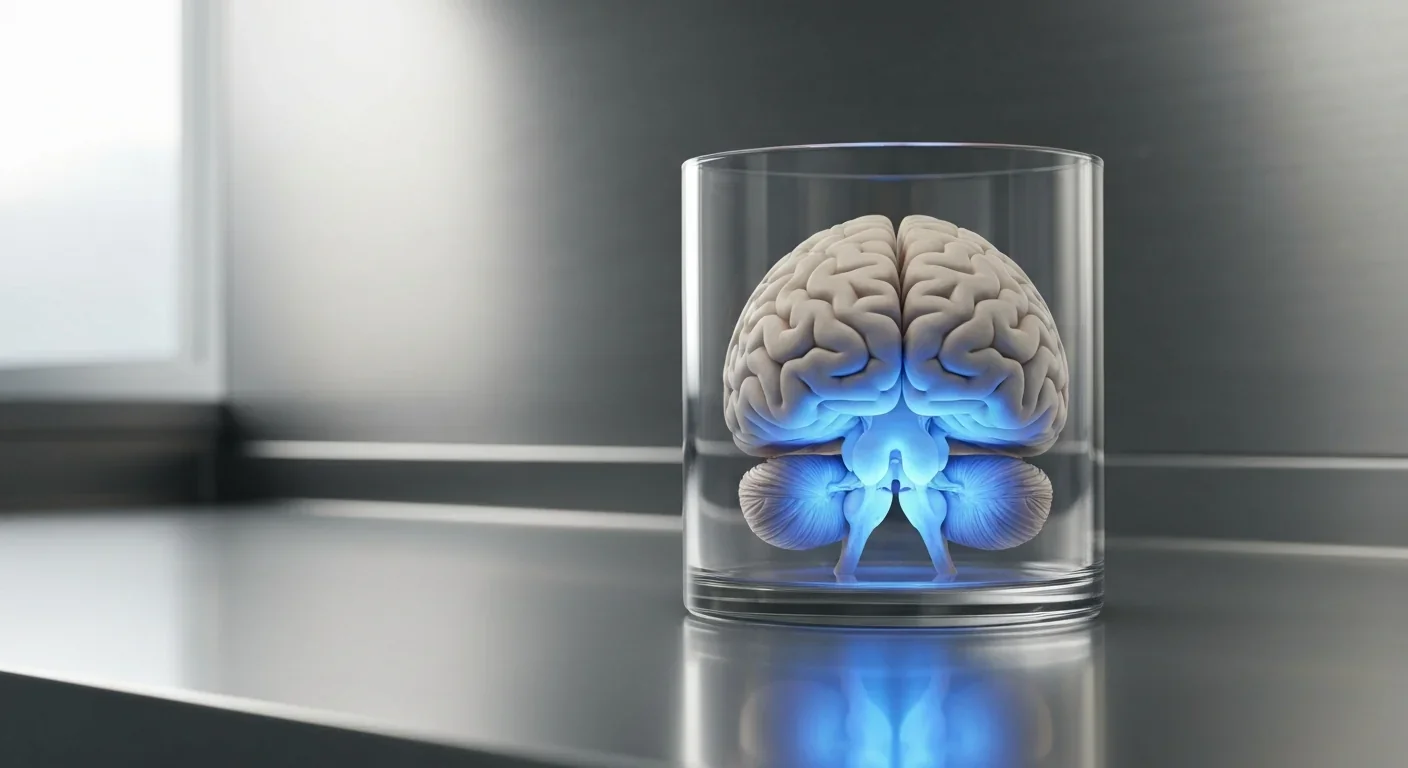
The locus coeruleus, a tiny brainstem structure, degenerates decades before Alzheimer's symptoms appear. Its loss cripples the brain's inflammation control, waste clearance, and sleep regulation. New imaging tools and noradrenergic therapies offer hope for early detection and prevention.

Research shows the sharing economy often increases total resource consumption through the Jevons paradox and rebound effects. Ride-sharing adds billions of vehicle miles, co-working spaces use more energy per worker, and diffused responsibility erodes conservation behavior. Breaking the paradox requires congestion pricing, accountability design, and matching sharing models to appropriate resource types.
Psychological reactance theory explains why banning or restricting things makes people want them more. From Prohibition to the Streisand effect to scarcity marketing, research shows that threatening people's freedom reliably backfires, and autonomy-supportive communication is far more effective.

A carnivorous pitcher plant in Borneo evolved to house bats instead of trapping insects, gaining up to 95% of its nitrogen from bat guano. The plant even built an ultrasonic reflector to help bats find it, revealing that carnivory in plants is a flexible spectrum.
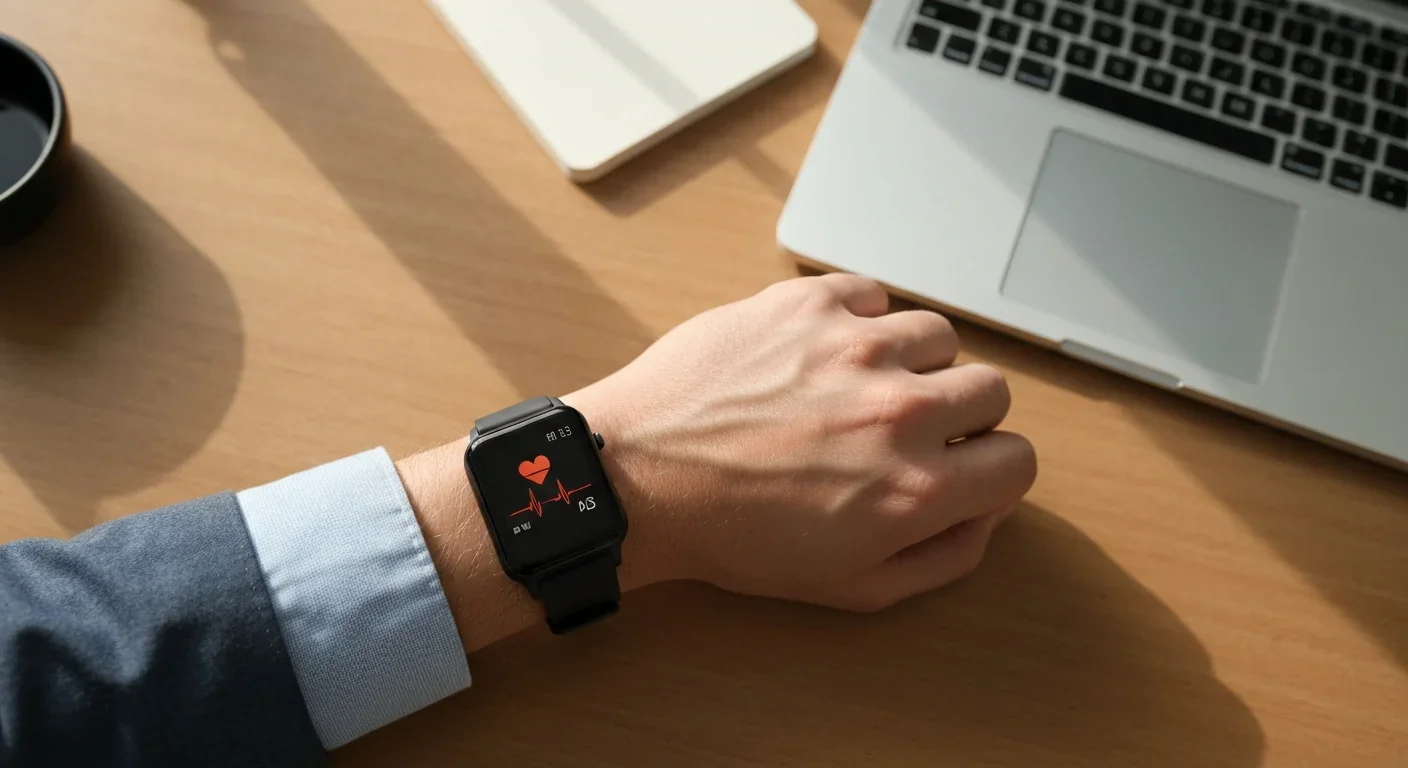
The quantified self movement began as a hacker-ethos pursuit of personal insight, but corporate wearables now funnel biometric data to employers, insurers, and data brokers. With 81% of Americans wrongly believing health apps are HIPAA-protected, a regulatory void enables health data to be sold for pennies while generating anxiety instead of empowerment.

CXL memory pooling lets servers dynamically share DRAM over a cache-coherent interconnect, eliminating the 40% stranded memory waste in data centers. With commercial hardware now shipping and Azure deploying CXL cloud instances, this technology promises to cut memory costs by 50% while enabling composable infrastructure.

Loading featured articles...