Why Banning Things Makes People Want Them More

Why Banning Things Makes People Want Them More

Action Bias: Why Doing Nothing Is Often the Best Move

Illusory Superiority: Why You Think You're Above Average

Status Quo Bias: Why Your Brain Fears Change

The Waiter Rule: Psychology of How You Treat Servers

Cheerleader Effect: Why You Look Better in Group Photos
TL;DR: Your brain remembers what you create far better than what you passively consume. The generation effect - discovered in 1978 - shows that actively producing information through writing, teaching, or problem-solving creates stronger, longer-lasting memories than passive reading or listening, with profound implications for education and professional learning.

Right now, millions of students are highlighting textbooks in fluorescent yellow, convinced they're learning. They're not. At least, not nearly as well as they think. While they passively drag markers across pages, their brains are operating in energy-saving mode, filing information into shallow, temporary storage that will evaporate before next week's exam. But there's a better way, one that's been hiding in plain sight for nearly 50 years.
In 1978, two psychologists named Norman Slamecka and Peter Graf discovered something remarkable: when people generated words themselves rather than simply reading them, they remembered those words far better later on. They called it the generation effect, and it's transformed our understanding of how memory actually works. The implications reach far beyond psychology labs. This simple principle explains why some students ace exams with half the study time, why employees forget training sessions within days, and why the future of education looks nothing like passive lectures and highlighted passages.
Your brain isn't designed to remember what it consumes. It's built to remember what it creates.
The generation effect emerged from frustration. Slamecka and Graf were studying memory when they noticed something odd in their experimental results. Participants who had to work to produce information, filling in missing letters or generating rhymes, consistently outperformed those who simply read complete words. The difference wasn't small. In some conditions, generated words were recalled twice as often as read words.
The original experiments were elegantly simple. Show someone a word pair like "fast - f__t," requiring them to generate "feet." Compare that to just showing "fast - feet." Same information, same exposure time, radically different outcomes. The people who generated the second word themselves remembered it far better days later.
Since then, hundreds of studies have confirmed and expanded these findings. The generation effect appears across ages, from children to elderly adults. It works for words, numbers, facts, concepts, and procedures. It holds up whether you're generating through writing, speaking, drawing, or problem-solving. Most importantly, it translates directly to real-world learning situations.
Effort during learning predicts retention after learning. The harder your brain works to generate information, the better you'll remember it later.
This wasn't just an academic curiosity. It revealed a fundamental truth about human cognition: effort during learning predicts retention after learning.
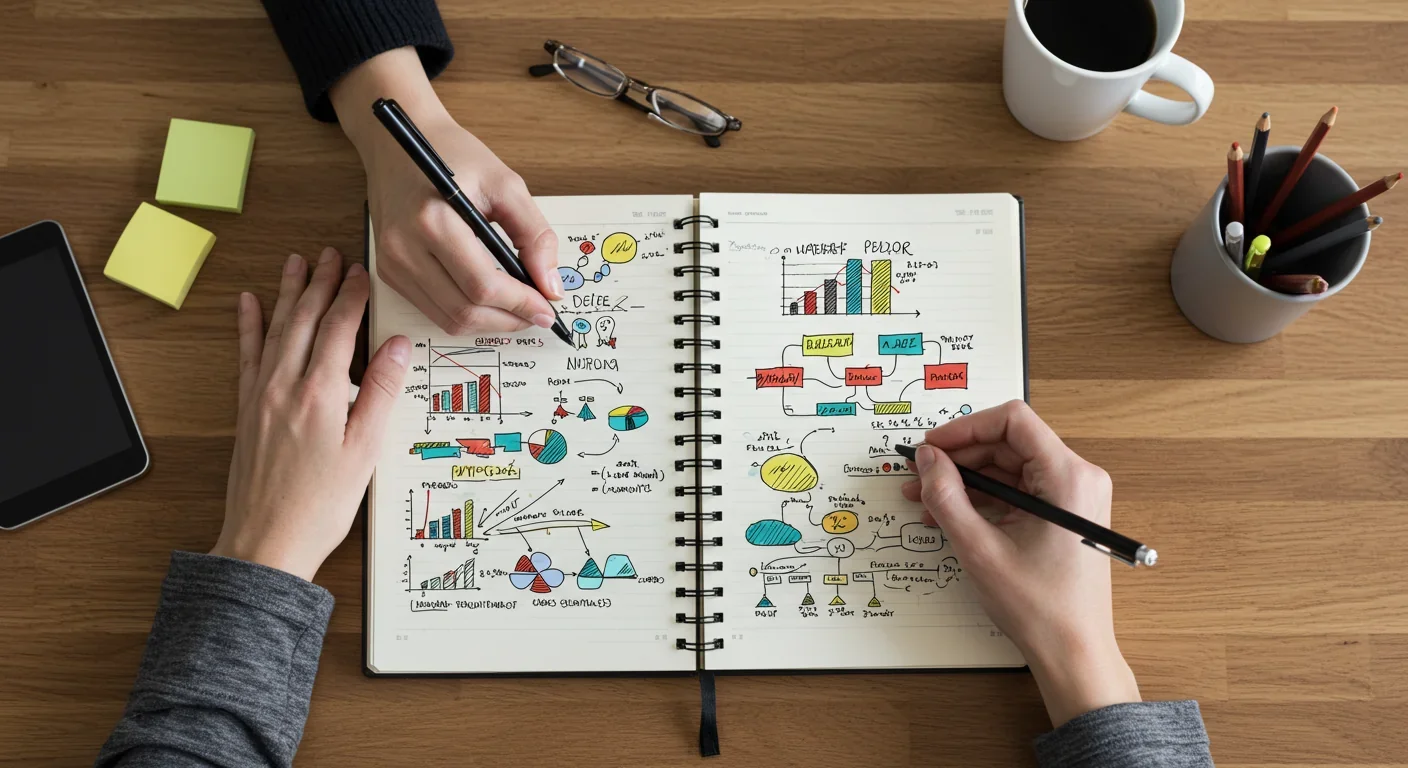
When you read something passively, your brain performs minimal processing. Information flows through working memory without requiring deep engagement. It's like water running over stones - contact happens, but nothing sticks. Your brain evolved to be efficient, not thorough. Unless there's a reason to invest energy in encoding information deeply, it won't.
Generation forces your brain to work differently. To generate an answer, you must:
- Retrieve related information from long-term memory
- Make connections between new and existing knowledge
- Engage in semantic processing of meaning
- Create multiple pathways to the same information
- Invest cognitive effort in construction
This multi-step process creates what psychologists call elaborative encoding. Instead of a single, fragile memory trace, you build a network of interconnected associations. When you later try to recall that information, you have multiple routes to access it. One pathway might fail, but others remain.
The levels of processing framework explains why this matters. Shallow processing - focusing on superficial features like how words look - creates weak memories. Deep processing - focusing on meaning and connections - creates strong, lasting memories. Generation essentially forces deep processing. You can't generate without engaging with meaning.
Neurologically, this shows up in brain imaging studies. Active generation activates more brain regions than passive reading, particularly in areas associated with semantic memory and executive function. The prefrontal cortex lights up, indicating that your brain is doing the hard work of organizing and integrating information rather than just recording it.
But here's what makes the generation effect particularly powerful: it compounds over time. Because generated information is encoded more deeply, it's easier to retrieve. And each successful retrieval strengthens the memory further, creating a virtuous cycle. The initial effort pays dividends for weeks, months, even years.
The generation effect isn't magic. It has boundaries, and understanding them matters for practical application.
Prior knowledge is essential. You can't generate information from nothing. If you're encountering completely new material, passive reading or listening might actually work better initially. Generation works best when you already have a foundation to build on. This explains why lectures and textbooks still have value - they provide the raw materials that active techniques can then transform into lasting knowledge.
The difficulty sweet spot. Generation needs to be challenging enough to require effort but not so difficult that you fail completely. Psychologists call this desirable difficulty. If generating is too easy, you're essentially just reading. If it's impossible, you're just guessing and potentially encoding wrong information. The ideal generation task requires you to stretch, but not break.
"The difficulty of generation is what makes it work. If it feels easy, you're probably not learning as much as you think."
- Cognitive Psychology Research
Type of information matters. The generation effect is strongest for meaningful, semantic information. It works brilliantly for vocabulary, concepts, principles, and relationships. It's weaker for arbitrary associations, random facts with no logical connection, or rote memorization of meaningless strings. Your brain's meaning-making machinery drives the effect, so meaning has to be present.

Individual differences exist. People with stronger working memory capacity tend to show larger generation effects. Those with more prior knowledge in a domain benefit more than novices. Age matters too - while the effect appears across the lifespan, it may be somewhat reduced in very young children whose cognitive systems are still developing.
Recent research has also identified important contextual factors. Generation appears stronger when learning time is limited, making it particularly valuable for efficient studying. It works better for recognition than pure recall, though both show benefits. And combining generation with other evidence-based techniques like spaced repetition creates synergistic effects.
Walk into a progressive classroom today and you'll see the generation effect in action, even if nobody uses that term.
Peer instruction has transformed how thousands of professors teach. Instead of lecturing for an hour, instructors pose challenging questions, give students time to think, then have them discuss answers with classmates before revealing the solution. This approach dramatically improves learning outcomes compared to traditional lectures because it forces students to generate understanding rather than passively receive it.
One physics education researcher found that when students were required to take retrieval practice tests, not just for grades but specifically to generate solutions from memory, their long-term retention improved by over 30%. The tests themselves became learning events, not just assessments.
Project-based learning takes generation further. When students tackle authentic problems - designing a sustainable garden, creating a documentary about local history, building a functional app - they must generate not just answers but entire frameworks for approaching complex challenges. The knowledge they construct in service of these projects sticks far better than information from worksheets or textbooks.
Medical education has embraced these principles particularly enthusiastically. Future doctors can't afford to forget critical information, so medical schools now emphasize active recall and problem-solving over passive studying. Students who actively generate diagnoses from case studies, even when they get them wrong initially, learn more effectively than those who study correct diagnoses.
The writing process itself exemplifies generation. When students compose essays, they're not just recording thoughts - they're generating connections, building arguments, synthesizing sources. This explains why writing assignments, despite being time-consuming to grade, produce such powerful learning outcomes. The act of writing is the learning.
As AI tools become ubiquitous, the temptation to outsource generation grows - threatening to eliminate the very cognitive work that creates learning.
But here's where it gets interesting for the future. As AI tools become ubiquitous, the temptation to outsource generation grows. Students can now have ChatGPT write their essays, solve their math problems, summarize their readings. This threatens to eliminate the very cognitive work that creates learning. Recent meta-analyses suggest that while AI can support learning when used properly, it can also create an illusion of understanding without genuine knowledge construction.
The challenge for educators becomes: how do we design learning experiences where generation remains essential, where AI is a tool rather than a replacement for thinking?

The generation effect doesn't stop at graduation. In corporate training, professional development, and workplace learning, the same principles apply - but they're often violated.
Consider the typical corporate training session. Employees sit through presentations, maybe watch some videos, fill out a workbook. Research consistently shows that within a week, they've forgotten 70% of what was covered. Within a month, it's closer to 90%. Companies spend billions on training that evaporates almost immediately.
Now consider alternatives that emphasize generation:
Case-based learning gives employees realistic scenarios and asks them to generate solutions. A sales team doesn't just hear about objection handling - they practice generating responses to challenging customer questions. An engineering team doesn't just review safety protocols - they analyze incident reports and generate prevention strategies.
Peer teaching programs leverage the generation effect brilliantly. When experienced employees teach newer ones, both benefit. The teachers generate deeper understanding by having to organize and explain their knowledge. The learners generate comprehension by asking questions and working through examples. Organizations that implement mentoring programs see knowledge retention improvements of 40% or more.
Retrieval practice in onboarding helps new employees cement critical information. Instead of reviewing policy manuals passively, they periodically test themselves, generating answers from memory. This simple intervention can double long-term retention of important procedures and information.
The shift toward asynchronous, self-paced online learning creates both opportunities and risks. On one hand, digital platforms can easily incorporate active generation through quizzes, simulations, and interactive exercises. On the other, they can also enable pure passive consumption - watching videos on 2x speed without genuine engagement.
The most effective professional learning programs recognize that combining passive and active methods works best. Use videos and articles to efficiently deliver information, then immediately follow with activities that require generation: discussions, problem-solving, teaching others, applying concepts to real work situations.
Understanding the generation effect is one thing. Actually using it is another. Here's how to transform passive consumption into active generation across different contexts.
For students:
Replace highlighting with active recall. After reading a section, close the book and write everything you remember. Then check what you missed. This generation process beats highlighting by a massive margin.
Turn your notes into questions. Instead of writing "The generation effect improves memory," write "Why does generating information improve memory more than reading it?" Later, practice answering those questions from memory.
Teach concepts to others, even if it's just to your study group or a patient family member. The act of organizing information to explain it forces deep processing.
Use practice problems not just to test yourself but as learning tools. Attempt problems before reviewing the relevant material. Even getting them wrong helps, because the generation attempt primes your brain to encode the correct information more deeply when you encounter it.
Try the production effect - reading information aloud to yourself. This adds a generative component to reading, as you're producing the words rather than just seeing them.
"After meetings or training sessions, immediately write a summary from memory. Don't review notes first. Force yourself to generate the key points, then check accuracy."
- Professional Learning Best Practice
For professionals:
After meetings or training sessions, immediately write a summary from memory. Don't review notes first. Force yourself to generate the key points, then check accuracy.

When learning new software or procedures, minimize time with tutorials. Get the basics, then try to accomplish real tasks. You'll struggle, search for answers, and make mistakes - all generative activities that create lasting knowledge.
Create "desirable difficulties" in your workflow. If you're learning a language, try writing emails in that language before checking translation tools. If you're studying a technical field, attempt to explain concepts in simple terms before consulting expert explanations.
Use spaced repetition systems for information you must retain long-term. These tools force you to generate answers at increasing intervals, leveraging both the generation effect and spaced practice.
For educators and trainers:
Design assessments that require generation, not just recognition. Multiple choice questions are easy to grade but create minimal generation. Short answer, essay questions, projects, and presentations all force deeper engagement.
Build "generation gaps" into your materials. Provide partial information, worked examples with missing steps, or problems that require students to create their own approaches.
Use the flipped classroom model. Students encounter material passively at home (reading, videos), then use class time for generative activities: discussions, problem-solving, projects, peer teaching.
Incorporate frequent low-stakes testing. The tests themselves become learning events through the generation they require.
For everyone:
When consuming content - articles, podcasts, books - pause regularly to generate summaries, connections, or applications. Don't just move from one piece of content to the next.
Create a "generation habit" in your learning routine. After reading anything significant, spend five minutes writing or speaking about it without referring back to the source.
Recognize that feeling slightly challenged during learning is a good sign, not a problem. The difficulty of generation is what makes it work.
Here's the paradox we're entering: just as cognitive science confirms that generation is essential for learning, technology is making it easier than ever to avoid generation entirely.
Students can input questions and receive complete essays. Professionals can ask AI to summarize documents, write code, or generate presentations. Consumers can have algorithms curate, filter, and pre-digest all information. The path of least resistance increasingly leads away from the cognitive effort that creates understanding.
This creates a fork in the road. One path leads to a world where people outsource more and more thinking, becoming dependent on AI for tasks they could once perform independently. Skills atrophy. Real understanding becomes rare. The generation gap between human and machine widens.
The most valuable educational technologies won't make learning easier - they'll make effortful generation more engaging and rewarding.
The other path uses AI as a scaffold for enhanced generation. AI handles routine aspects, freeing cognitive resources for higher-level synthesis and creation. It provides the raw materials - summaries, translations, compilations - that humans then actively process, question, and transform. In this scenario, AI becomes a tool for augmenting human learning, not replacing it.
Which path we take depends on design choices happening right now. Educational platforms can either enable passive consumption or require active generation. Corporate learning systems can either test for rote recognition or demand applied problem-solving. AI interfaces can either do all the work or prompt users to think actively.
The generation effect suggests that the most valuable educational technologies won't be those that make learning easiest but those that make effortful generation most engaging and rewarding. The best learning tools will feel harder to use, not easier, because they'll demand that users do the cognitive work that creates lasting change.
We're also seeing the emergence of "meta-generative" skills - learning how to learn in an AI-augmented world. This means understanding when to generate yourself versus when to leverage AI, how to verify and extend AI-generated content rather than accepting it passively, and how to use AI tools to create more sophisticated generation tasks.
The organizations and individuals who thrive will be those who master this balance. They'll use consumption wisely - as efficient input - but prioritize generation as the mechanism of real learning and innovation.
The half-life of knowledge is shrinking. In many technical fields, half of what you know becomes obsolete every few years. This creates an unprecedented premium on learning efficiency. You simply can't afford to spend time on learning approaches that don't work.
The generation effect offers a way forward. By understanding how memory actually works - by recognizing that your brain remembers what it creates - you can multiply your learning effectiveness. The same hours of study produce dramatically different results when you generate rather than consume.
This isn't just about individual success. As automation handles more routine tasks, human value increasingly lies in the ability to learn, adapt, and create. The future belongs to those who can rapidly generate new understanding, who can take disparate information and synthesize novel insights, who can teach others and build collective knowledge.
Schools that prioritize generation over consumption will produce students better equipped for a changing world. Companies that build learning cultures around active generation will adapt faster and innovate more successfully. Individuals who embrace generative learning strategies will find themselves less displaced by technological change because they'll be the ones driving it.
The choice is yours: highlight your way through information, hoping some will stick, or actively generate understanding, knowing it will. Your brain has been telling you the answer all along. It remembers what you create, not what you consume. The question is whether you'll listen.

Project Orion was a real 1960s program to reach other stars by detonating 800 nuclear bombs behind a spacecraft. The physics worked and the engineering was feasible, but the 1963 nuclear test ban treaty killed it. It remains the most credible interstellar spacecraft ever designed.
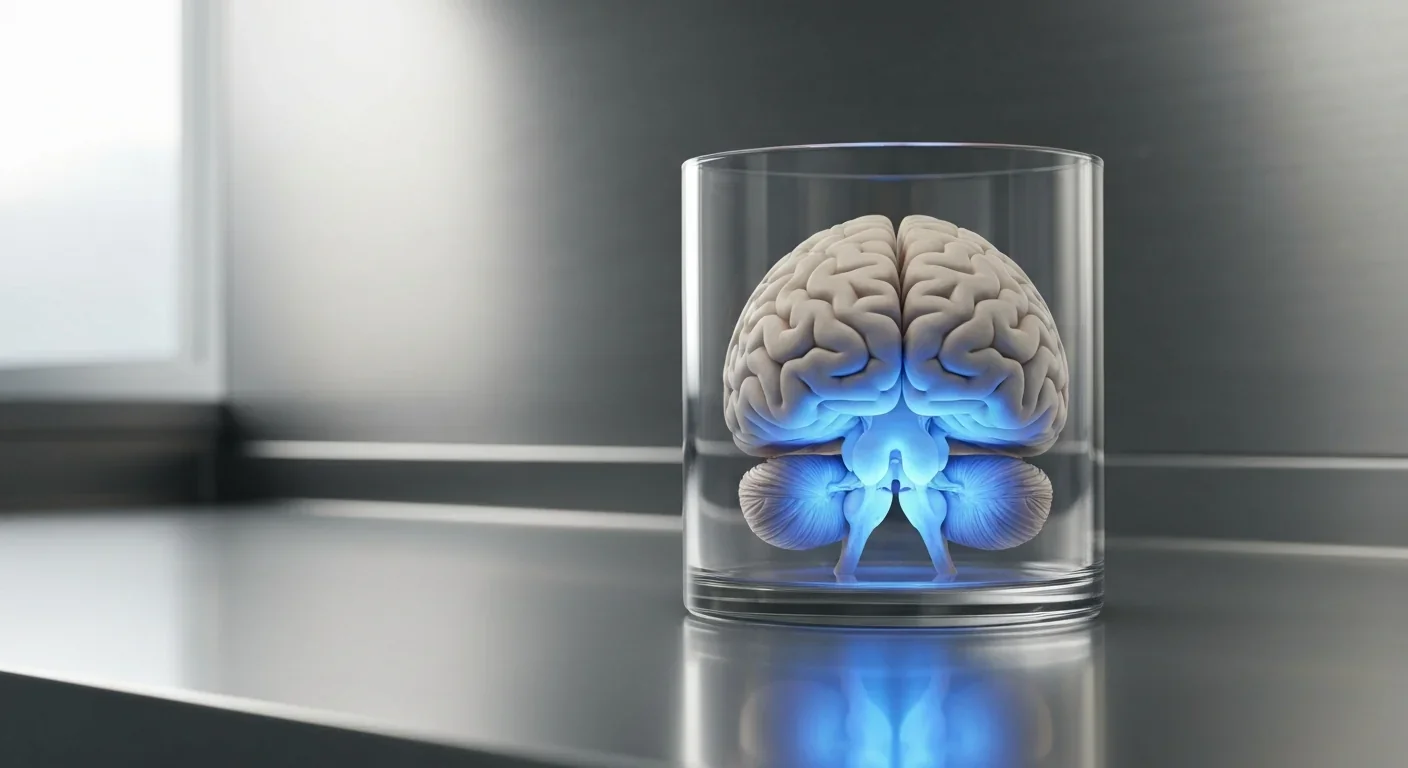
The locus coeruleus, a tiny brainstem structure, degenerates decades before Alzheimer's symptoms appear. Its loss cripples the brain's inflammation control, waste clearance, and sleep regulation. New imaging tools and noradrenergic therapies offer hope for early detection and prevention.
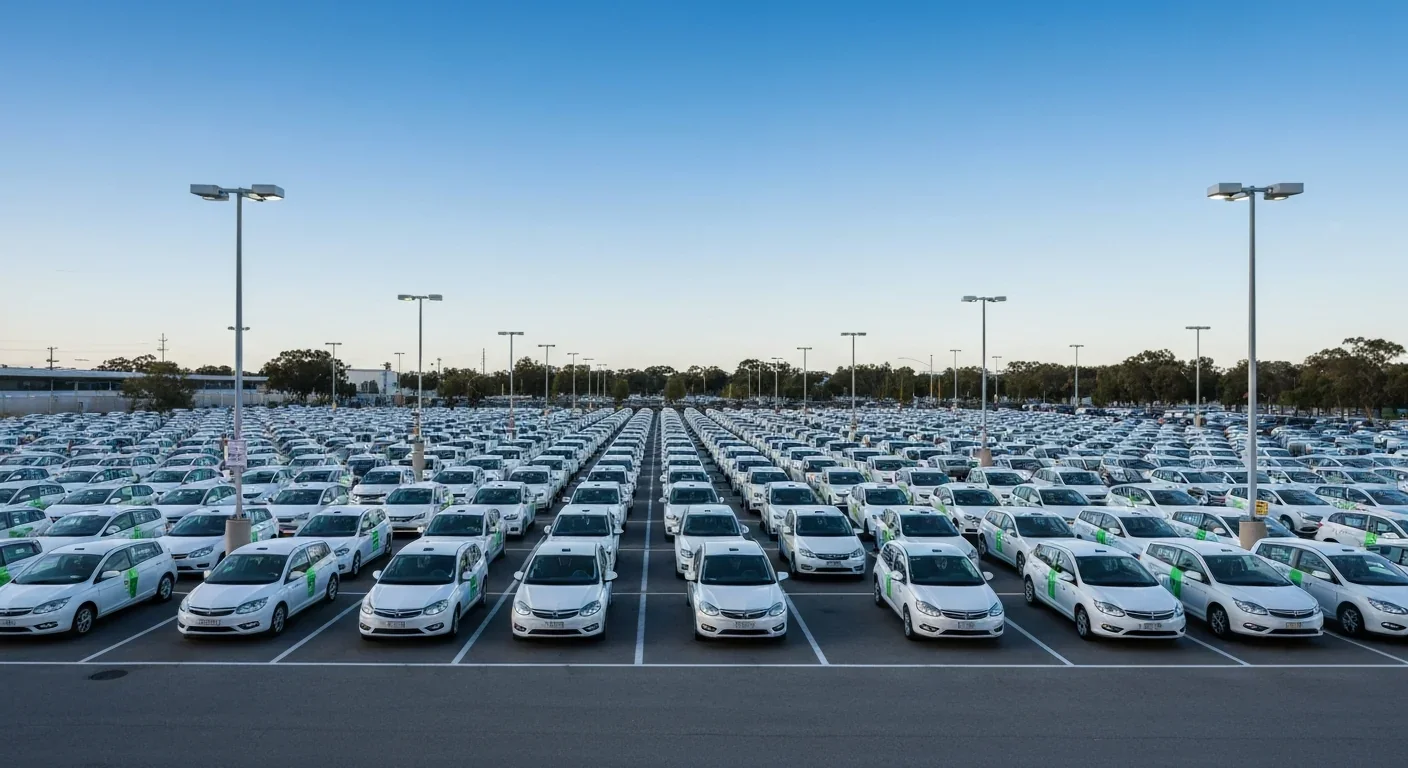
Research shows the sharing economy often increases total resource consumption through the Jevons paradox and rebound effects. Ride-sharing adds billions of vehicle miles, co-working spaces use more energy per worker, and diffused responsibility erodes conservation behavior. Breaking the paradox requires congestion pricing, accountability design, and matching sharing models to appropriate resource types.
Psychological reactance theory explains why banning or restricting things makes people want them more. From Prohibition to the Streisand effect to scarcity marketing, research shows that threatening people's freedom reliably backfires, and autonomy-supportive communication is far more effective.

A carnivorous pitcher plant in Borneo evolved to house bats instead of trapping insects, gaining up to 95% of its nitrogen from bat guano. The plant even built an ultrasonic reflector to help bats find it, revealing that carnivory in plants is a flexible spectrum.

The quantified self movement began as a hacker-ethos pursuit of personal insight, but corporate wearables now funnel biometric data to employers, insurers, and data brokers. With 81% of Americans wrongly believing health apps are HIPAA-protected, a regulatory void enables health data to be sold for pennies while generating anxiety instead of empowerment.

CXL memory pooling lets servers dynamically share DRAM over a cache-coherent interconnect, eliminating the 40% stranded memory waste in data centers. With commercial hardware now shipping and Azure deploying CXL cloud instances, this technology promises to cut memory costs by 50% while enabling composable infrastructure.

Loading featured articles...