Why Banning Things Makes People Want Them More

Why Banning Things Makes People Want Them More

Action Bias: Why Doing Nothing Is Often the Best Move

Illusory Superiority: Why You Think You're Above Average

Status Quo Bias: Why Your Brain Fears Change

The Waiter Rule: Psychology of How You Treat Servers

Cheerleader Effect: Why You Look Better in Group Photos
TL;DR: The ideomotor effect explains how unconscious thoughts trigger tiny muscle movements, debunking paranormal claims about Ouija boards and dowsing while revealing how our brains prepare for actions before we consciously decide to move.

Close your eyes and picture yourself picking up a coffee cup. Simple enough, right? But here's what you didn't notice: your hand just twitched. Microscopically. Involuntarily. Your brain began translating thought into motion before you even decided to move.
This is the ideomotor effect, and it's been quietly shaping human behavior for millennia. From Victorian séances to modern neurofeedback therapy, this phenomenon reveals something unsettling about the boundary between mind and body: it's far blurrier than we think.
Picture a dimly lit parlor in 1850s London. A dozen hands rest on a wooden planchette. Someone asks, "Is there a spirit here?" The pointer glides across the board, spelling out Y-E-S. Gasps fill the room.
No ghosts necessary. What these Ouija board users experienced was pure neurobiology, not the supernatural. When you expect something to happen, your brain doesn't wait for conscious permission to act. It begins preparing motor commands immediately.
Scientists call this the ideomotor phenomenon: unconscious muscular movements triggered by thoughts or expectations. It's the reason dowsing rods appear to find water, why facilitated communication felt miraculous (until it was debunked), and why you can't hold a pendulum perfectly still while thinking about it swinging.
The effect is so subtle that it operates below the threshold of conscious awareness. You genuinely don't feel yourself moving. But motion-capture systems tell a different story.
The term "ideomotor" first appeared in 1852, coined by physiologist William Benjamin Carpenter while investigating how Ouija boards worked. Carpenter proposed what seemed radical at the time: ideas themselves could trigger muscular responses without conscious volition.
He wasn't alone in his curiosity. Physicist Michael Faraday conducted elegant experiments during the table-turning craze of the 1850s. People insisted spirits were moving furniture during séances. Faraday used simple lever devices to prove the participants were unconsciously pushing the tables themselves.
French chemist Michel Eugène Chevreul demonstrated the same principle with pendulums. Hold a weight on a string and think about it swinging in circles. Within seconds, it will. Not because of mystical energy, but because your fingers are making microscopic movements at frequencies that match the pendulum's resonance.
By the early 20th century, psychologists like William James had integrated ideomotor theory into mainstream psychology. The paranormal explanations crumbled under scientific scrutiny, but the phenomenon itself became a window into how the brain converts thought into action.
Here's where it gets fascinating. The motor cortex, located along the top of your brain, doesn't just execute movements you consciously decide to make. It's constantly humming with preparatory activity based on what you're thinking about.
When you imagine an action, your brain activates the same neural pathways it would use to actually perform that action. Neuroimaging studies show this clearly: thinking about moving your hand lights up similar brain regions as actually moving it.
The key players in this process include:
The premotor cortex and supplementary motor area handle the planning stages. When you think "I should pick up that cup," these regions start choreographing the movement sequence before you've consciously decided to act.
The basal ganglia help select which motor programs to run and which to inhibit. When this system malfunctions, you get disorders like ideomotor apraxia, where patients can't imitate gestures on command but might spontaneously perform the same movements.
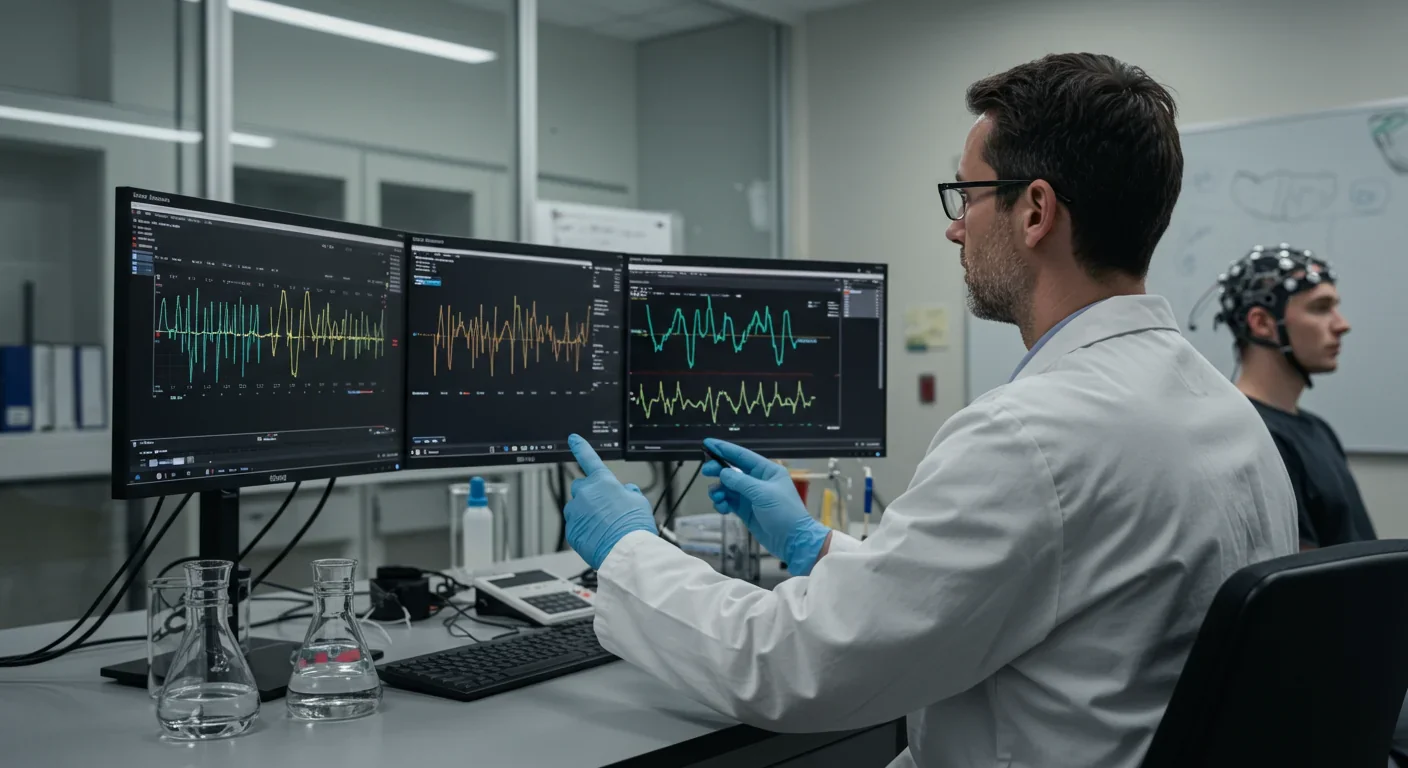
The superior posterior parietal cortex contains what researchers call the "dynamic body schema," a constantly updated mental map of your body's position and capabilities. This region translates imagined movements into motor coordinates.
What makes the ideomotor effect so intriguing is that these preparatory signals sometimes leak through into actual movement, even when you haven't given conscious approval. The threshold between "planning to move" and "moving" is more porous than our subjective experience suggests.
Let's clear up some persistent misconceptions, because the ideomotor effect has been weaponized to sell everything from ghost-hunting equipment to alternative medicine.
Myth: Dowsing rods detect underground water
Reality: Controlled tests consistently show dowsers perform no better than chance. The rods move because the person holding them unconsciously tilts their hands in response to subtle environmental cues or expectations about where water "should" be.
Myth: Ouija boards channel spirits
Reality: Multiple studies confirm that Ouija board movements come from participants, not external forces. When users are blindfolded and the board is secretly rotated, the planchette spells gibberish. The effect depends entirely on visual feedback.
Myth: Facilitated communication allows nonverbal individuals to type complex messages
Reality: This technique, where a facilitator guides a disabled person's hand over a keyboard, has been thoroughly debunked. Tests show the messages come from the facilitator, not the client. It's a tragic example of the ideomotor effect causing false hope.
Myth: Applied kinesiology can diagnose illness through muscle testing
Reality: When practitioners test muscle strength while a patient holds various substances, the results reflect the practitioner's expectations, not the patient's health status. Blinded tests eliminate the effect entirely.
The pattern is consistent: any practice that requires someone to hold an object or make subtle movements while thinking about specific outcomes is vulnerable to ideomotor influence.
Strip away the pseudoscience, though, and the ideomotor effect has genuine therapeutic applications. Hypnotherapists have used ideomotor signaling for decades as a communication tool during trance states.
The technique works like this: a therapist asks a patient's unconscious mind to answer questions using finger movements. "If the answer is yes, your index finger will lift. If no, your thumb." Patients report their fingers moving "by themselves" in response to questions they couldn't consciously answer.
Is this really the unconscious mind communicating? Maybe. Or it could be conscious thoughts producing ideomotor responses below the threshold of perceived agency. Either way, it sometimes helps patients access information or feelings they're struggling to articulate directly.
Recent neuroscience research has begun mapping what happens in the brain during hypnotic ideomotor suggestions. When a hypnotized subject is told "your arm is becoming lighter and will lift on its own," brain activity shows reduced connectivity in areas associated with sense of agency. The movement feels involuntary because the normal neural signatures of intentional action are suppressed.
Physical therapists and osteopaths also use variations of ideomotor principles in techniques like fascial unwinding, where they follow the subtle, unconscious movements of a patient's body to release tension patterns.
The difference between legitimate and fraudulent applications comes down to honesty about mechanism and outcome. Ethical practitioners understand they're working with unconscious motor responses, not supernatural forces or definitive diagnostic tools.
Now we're entering genuinely futuristic territory. If thoughts can produce measurable physical movements, what happens when we amplify those signals?
Brain-computer interfaces (BCIs) are already doing this. Paralyzed patients can control robotic arms using motor imagery - they think about moving their arm, and sensors detect the neural activity in their motor cortex. The thought pattern is similar enough to an actual movement command that software can decode the intention.
This is the ideomotor effect scaled up and digitized. Instead of producing microscopic finger twitches, the brain's preparatory activity drives prosthetics or computer cursors.
Neurofeedback training uses similar principles. Patients learn to control specific brain activity patterns by receiving real-time feedback. Some researchers are exploring whether we can train people to enhance or suppress ideomotor responses deliberately.
In sports psychology, understanding the ideomotor effect has influenced mental rehearsal techniques. Athletes who vividly imagine performing movements show measurable improvements in actual performance, partly because mental practice activates the same motor pathways as physical practice.
Even our understanding of consciousness is shifting. The readiness potential - neural activity that begins before we consciously decide to move - was famously studied by Benjamin Libet. His work suggested that unconscious brain processes initiate actions before conscious awareness kicks in. This remains controversial, but it highlights how the boundary between voluntary and involuntary movement is more complex than everyday experience suggests.

Here's the uncomfortable truth: our brains are primed to see patterns and agency where none exist. The ideomotor effect exploits this tendency perfectly.
When you're using a Ouija board, you're not consciously pushing the planchette. The movements are real but unintended. So your brain constructs the most compelling available explanation: an external force must be moving it. This interpretation feels more plausible than "my unconscious mind is guiding my hands based on letter combinations I'm not aware of expecting."
This is why paranormal beliefs persist despite debunking. Victorian spiritualists weren't stupid or dishonest (mostly). They were experiencing genuine phenomena and interpreting them through the conceptual frameworks available in their culture. The movements were real. The explanation was wrong.
The same pattern appears in modern contexts. People "muscle test" supplements and swear they can feel which ones their body needs. Dowsers find water at rates barely above chance but remember their hits and forget their misses. The ideomotor effect provides the physical experience that confirmation bias then reinforces.
So what do we do with this knowledge? For starters, we can be more skeptical of practices that depend on subtle, unconscious movements to deliver important information. If someone claims to diagnose your health issues by testing muscle strength, find a different practitioner.
We can also harness the effect deliberately. Visualization techniques in therapy and sports aren't pseudoscience - they work because mental imagery activates motor systems. The key is understanding the mechanism without overinterpreting the results.
Perhaps most importantly, we can hold this as a humbling reminder that our conscious minds aren't quite as in charge as they feel. A significant amount of our behavior originates in neural processes we never directly experience. The ideomotor effect is just one example of unconscious influence made visible.
Your brain is constantly preparing for actions you might take, running simulations, priming motor pathways. Most of this activity stays subliminal. But occasionally, under the right conditions, those whispers of intention become visible movements. Not because spirits are moving you, but because your mind is already in motion, translating thought into potential action.
The next time you pick up that coffee cup, pay attention. The movement started long before you reached out your hand. And that invisible preparation, that motor hum beneath conscious awareness, is what the ideomotor effect allows us to glimpse.
We're not possessed by ghosts. We're inhabited by our own unconscious processes, endlessly rehearsing, planning, and occasionally - just occasionally - letting those plans slip into the physical world before we've given the official go-ahead.
And honestly? That's far more fascinating than any séance.

Project Orion was a real 1960s program to reach other stars by detonating 800 nuclear bombs behind a spacecraft. The physics worked and the engineering was feasible, but the 1963 nuclear test ban treaty killed it. It remains the most credible interstellar spacecraft ever designed.
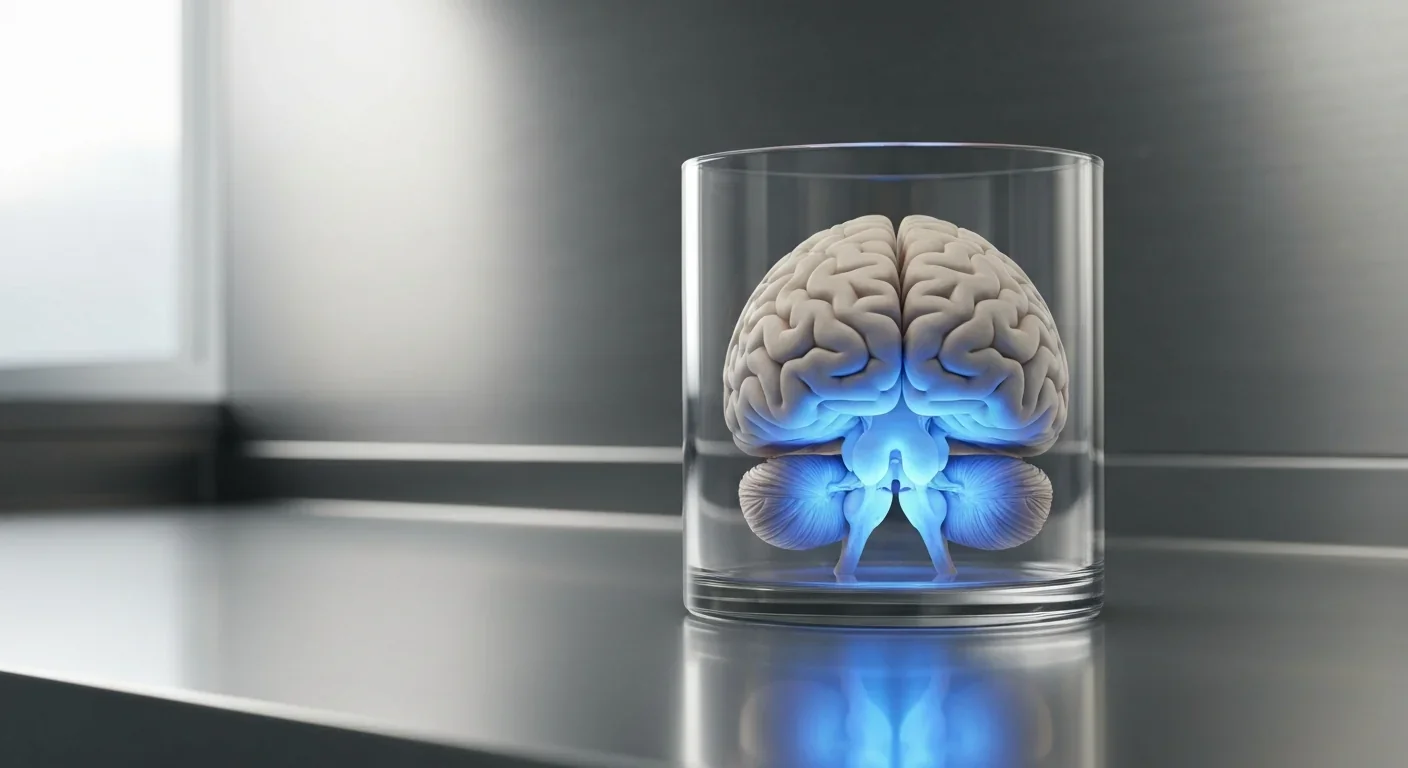
The locus coeruleus, a tiny brainstem structure, degenerates decades before Alzheimer's symptoms appear. Its loss cripples the brain's inflammation control, waste clearance, and sleep regulation. New imaging tools and noradrenergic therapies offer hope for early detection and prevention.

Research shows the sharing economy often increases total resource consumption through the Jevons paradox and rebound effects. Ride-sharing adds billions of vehicle miles, co-working spaces use more energy per worker, and diffused responsibility erodes conservation behavior. Breaking the paradox requires congestion pricing, accountability design, and matching sharing models to appropriate resource types.
Psychological reactance theory explains why banning or restricting things makes people want them more. From Prohibition to the Streisand effect to scarcity marketing, research shows that threatening people's freedom reliably backfires, and autonomy-supportive communication is far more effective.

A carnivorous pitcher plant in Borneo evolved to house bats instead of trapping insects, gaining up to 95% of its nitrogen from bat guano. The plant even built an ultrasonic reflector to help bats find it, revealing that carnivory in plants is a flexible spectrum.

The quantified self movement began as a hacker-ethos pursuit of personal insight, but corporate wearables now funnel biometric data to employers, insurers, and data brokers. With 81% of Americans wrongly believing health apps are HIPAA-protected, a regulatory void enables health data to be sold for pennies while generating anxiety instead of empowerment.

CXL memory pooling lets servers dynamically share DRAM over a cache-coherent interconnect, eliminating the 40% stranded memory waste in data centers. With commercial hardware now shipping and Azure deploying CXL cloud instances, this technology promises to cut memory costs by 50% while enabling composable infrastructure.

Loading featured articles...