Why Banning Things Makes People Want Them More

Why Banning Things Makes People Want Them More

Action Bias: Why Doing Nothing Is Often the Best Move

Illusory Superiority: Why You Think You're Above Average

Status Quo Bias: Why Your Brain Fears Change

The Waiter Rule: Psychology of How You Treat Servers

Cheerleader Effect: Why You Look Better in Group Photos
TL;DR: Nominative determinism suggests people gravitate toward careers matching their names, backed by studies on implicit egotism and the name-letter effect. While compelling examples abound, critics argue confirmation bias and demographic confounds explain much of the evidence.

The data reveals a pattern that sociologists never predicted: people named Dennis become dentists at rates that defy pure coincidence, meteorologists named Freeze deliver your weather forecast, and a urologist named Splatt publishes in medical journals. Funny? Sure. But also surprisingly well-documented. Welcome to nominative determinism, the hypothesis that your name might quietly nudge you toward your life's work. And before you dismiss it as cocktail party trivia, consider this: peer-reviewed studies in the Journal of Personality and Social Psychology have been fighting over whether this is real science or the world's most persistent cognitive illusion for over two decades.
Nominative determinism is the idea that people gravitate toward professions, places, or life paths that resemble their names. Not because the universe has a sense of humor (though it might), but because of subtle psychological forces operating below conscious awareness. The term itself was coined in 1994 by the humorous Feedback column in New Scientist magazine, after readers kept sending in examples of researchers whose surnames eerily matched their fields. A study on incontinence by a Dr. Splatt? A book on polar exploration by Daniel Snowman? The column collected so many examples that editors gave the phenomenon a proper name and ran a regular feature on it for years.
But here's the important distinction. An "aptronym," a term likely coined by American journalist Franklin P. Adams in the 1950s, simply describes a name that happens to fit someone's occupation. Nominative determinism goes further. It proposes a causal mechanism, suggesting that the name actually influences the career choice, not the other way around. That's what makes it scientifically interesting, and scientifically controversial.
The intuition that names carry power is ancient. The Latin proverb "nomen est omen" (the name is a sign) appears across French, German, Italian, Dutch, Slovenian, and Polish, suggesting a deep cross-cultural belief that names and destiny are linked. In many traditions, naming a child is considered one of the most consequential decisions parents make, precisely because of this belief.
The first serious thinker to engage with the idea was Carl Jung. In his 1952 work Synchronicity: An Acausal Connecting Principle, Jung noted what he called the "compulsion of the name," pointing out that Sigmund Freud's surname, meaning "joy" in German, aligned suspiciously well with his focus on the pleasure principle. Jung framed these coincidences as examples of synchronicity, meaningful connections that couldn't be explained by conventional causation.
"Authors gravitate to the area of research which fits their surname."
- New Scientist, Feedback column, 1994
Of course, there's a much more straightforward historical explanation for why someone named Baker might work in a bakery. In medieval England, surnames were literally assigned based on a person's trade. The name Baker comes from the Old English baecere, meaning "one who bakes." Smith derives from smitan, meaning "to smite," referring to blacksmiths. Taylor, Carpenter, Miller, Cooper, Fletcher, Weaver ... the list goes on. These names became hereditary, passed from father to son regardless of whether the descendants actually practiced the trade. So when modern researchers find that people named Baker are overrepresented among bakers, they need to account for this genealogical confound.

The leading scientific explanation for nominative determinism is a concept called implicit egotism. First formally studied by Brett Pelham, Matthew Mirenberg, and John Jones in their landmark 2002 paper "Why Susie Sells Seashells by the Seashore," published in the Journal of Personality and Social Psychology, the theory proposes that people have an unconscious preference for things associated with themselves, including the letters in their own names.
The foundation for this idea was laid in 1985 by Belgian psychologist Jozef Nuttin, who discovered the name-letter effect. The story of its discovery is wonderfully human: around 1978, Nuttin noticed he had a peculiar fondness for car license plates containing letters from his own name. This personal observation led him to design experiments at the Katholieke Universiteit Leuven, where he demonstrated that people consistently prefer letters that appear in their own names over other letters. The effect has since been replicated across multiple languages and cultures.
As psychologist Ryan McNeill put it: "If I have positive associations about myself, I'm going to have positive associations about things I associate with myself." This simple principle, that we're unconsciously drawn to self-resembling stimuli, could theoretically extend from letter preferences all the way up to career choices.
The name-letter effect has been replicated across dozens of languages and cultures since 1985, making it one of the most robust findings in self-concept research. But whether it actually drives major life decisions remains hotly debated.
Beyond implicit egotism, researchers have proposed several other mechanisms. Priming suggests that repeatedly hearing your name in association with certain concepts creates neural pathways that make those concepts feel more familiar and attractive. Identity congruence theory suggests that people seek out roles and environments that align with their sense of self, and a name is one of the earliest and most persistent components of identity. And there's the social dimension: other people's reactions to your name can create expectations that become self-fulfilling prophecies.

Pelham's 2002 study remains the most cited piece of evidence. Using US Census and occupational databases, his team found that people named Dennis or Denise were disproportionately represented among dentists compared to people with other similarly common names. The study also found that people were more likely to live in cities whose names resembled their own, and that the effect extended to marriage partners with similar-sounding names.
In 2015, Pelham and Carvallo pushed the research further. They controlled for gender, ethnicity, and education levels, and still found consistent evidence that people disproportionately work in eleven occupations whose titles match their surnames: baker, barber, butcher, butler, carpenter, farmer, foreman, mason, miner, painter, and porter. A study of the 1940 US Census found that men were 15.5% more likely to work in occupations matching their surnames.
A 2015 study in the British Medical Journal found that doctors' surnames were significantly correlated with their medical specialties, with notable overrepresentation in fields like urology. And in a particularly creative extension of the concept, a BMJ study found that patients named Brady were significantly more likely to require pacemakers (1.38% compared to 0.61% for non-Bradys), a nod to the medical term bradycardia for abnormally slow heart rate.
The name-letter effect also shows up in surprising places. Research suggests that people's buying habits are linked to the letters in their names, that people whose names share an initial with a hurricane name are more likely to donate to that hurricane's disaster relief, and that economists with surnames starting with letters earlier in the alphabet are more likely to get tenure and win Nobel Prizes, thanks to alphabetical ordering conventions in academic citations.
Then came Uri Simonsohn. In 2011, this University of Pennsylvania researcher, known for his work on detecting false positives and p-hacking in psychology, reanalyzed Pelham's data. His conclusion was devastating: once you control for demographic confounds like birth cohort and geographic distribution, the apparent overrepresentation of name-matching professions largely disappeared. Simonsohn argued that implicit egotism might only influence low-stakes decisions, like choosing a charity or a holiday destination, rather than major life choices like careers.

Confirmation bias is the elephant in the room. We notice when a dentist is named Dennis because it's memorable and amusing. We don't notice the thousands of dentists named Johnson or Garcia. This is textbook confirmation bias, the tendency to search for, interpret, and recall information that confirms what we already believe. Social media amplifies this further: aptonym sightings go viral precisely because they're surprising, creating the illusion that they're more common than they actually are.
There's also the problem of publication bias. Studies that find a cool, counterintuitive result (names predict careers!) are more likely to get published than studies that find nothing. This creates a literature that systematically overstates the strength of the evidence.
"Implicit egotism is the hypothesis that humans have an unconscious preference for things they associate with themselves."
- Pelham, Mirenberg & Jones, 2002
Even if the career-matching evidence is shaky, names clearly shape lives in other measurable ways. Research from Dr. David Sidhu at Carleton University shows that the sounds in your name create instant personality stereotypes. Short, sharp names like Katie or Jack make people expect extroversion, while softer names like Owen or Lauren suggest agreeableness. These impressions fade once people get to know you, but in situations where snap decisions matter, like job interviews and dating profiles, they can be consequential.
The landmark Bertrand and Mullainathan study found that resumes with stereotypically Black names received 33% fewer callbacks than identical resumes with white-sounding names. A Black-named applicant needed an additional eight years of experience to match the response rate of a white-named applicant. Names don't just nudge, they can slam doors shut.
A 2020 study of 1,172 CEOs found that executives with unusual names were more likely to adopt distinctive, unconventional management strategies. But researchers caution that rare names may simply reflect unconventional parents and upbringings.
A 2020 study found that people with rarer names were statistically more likely to pursue unconventional careers like film directing. And analysis of 1,172 CEOs published in the Strategic Management Journal revealed that executives with unusual names were more likely to adopt distinctive management styles. But as Professor Rene Mottus of the University of Edinburgh points out, rare names may simply be a proxy for unconventional parents who provide unconventional upbringings. Genetics and environment, not the name itself, might be doing the heavy lifting.

The question of whether nominative determinism works the same way across cultures is largely unanswered, but the clues are fascinating. In cultures where names carry transparent meanings, like many Chinese and East Asian naming traditions, the psychological impact could be stronger because the meaning is constantly reinforced. A Chinese study at Beijing's Institute of Psychology found that people with names perceived as less warm or less moral were more likely to have criminal records, suggesting that social reactions to names can have extreme consequences.
Meanwhile, the German dating study from 2011 found that old-fashioned names led to higher rejection rates on dating platforms, showing that name effects vary with cultural context and generational trends. The Latin "nomen est omen" persists in many European languages, but the mechanisms through which names operate likely differ based on whether a culture's naming system emphasizes occupational, patronymic, or aspirational conventions.
Business strategists have taken notice too. The concept extends into organizational naming, where the name given to a team, a product, or even a meeting can frame expectations and influence outcomes. What you call something shapes how people engage with it.
So does your name shape your destiny? The honest answer is: probably a little, but not in the straightforward way the best examples suggest. The name-letter effect is real and robustly replicated. People genuinely do prefer letters from their own names, and this preference shows up in consumer choices and charitable giving. But the leap from "I like the letter D" to "I became a dentist because I'm named Dennis" remains scientifically contested.
What's not contested is that names carry enormous social weight. They signal gender, ethnicity, class, and generation. They create first impressions that can open or close doors. They become part of our identity in ways that are hard to separate from who we fundamentally are. The real lesson of nominative determinism isn't that names are magical. It's that identity is a powerful force, and the name we're given is one of the first threads in the web of self-concept that guides every decision we make.
The next time you meet a Dr. Payne at the hospital or a Judge Law in the courtroom, go ahead and smile at the coincidence. But remember: the most interesting question isn't whether names cause careers. It's how the stories we tell about ourselves, starting with the very first word we learn to answer to, shape the lives we end up living.

Project Orion was a real 1960s program to reach other stars by detonating 800 nuclear bombs behind a spacecraft. The physics worked and the engineering was feasible, but the 1963 nuclear test ban treaty killed it. It remains the most credible interstellar spacecraft ever designed.
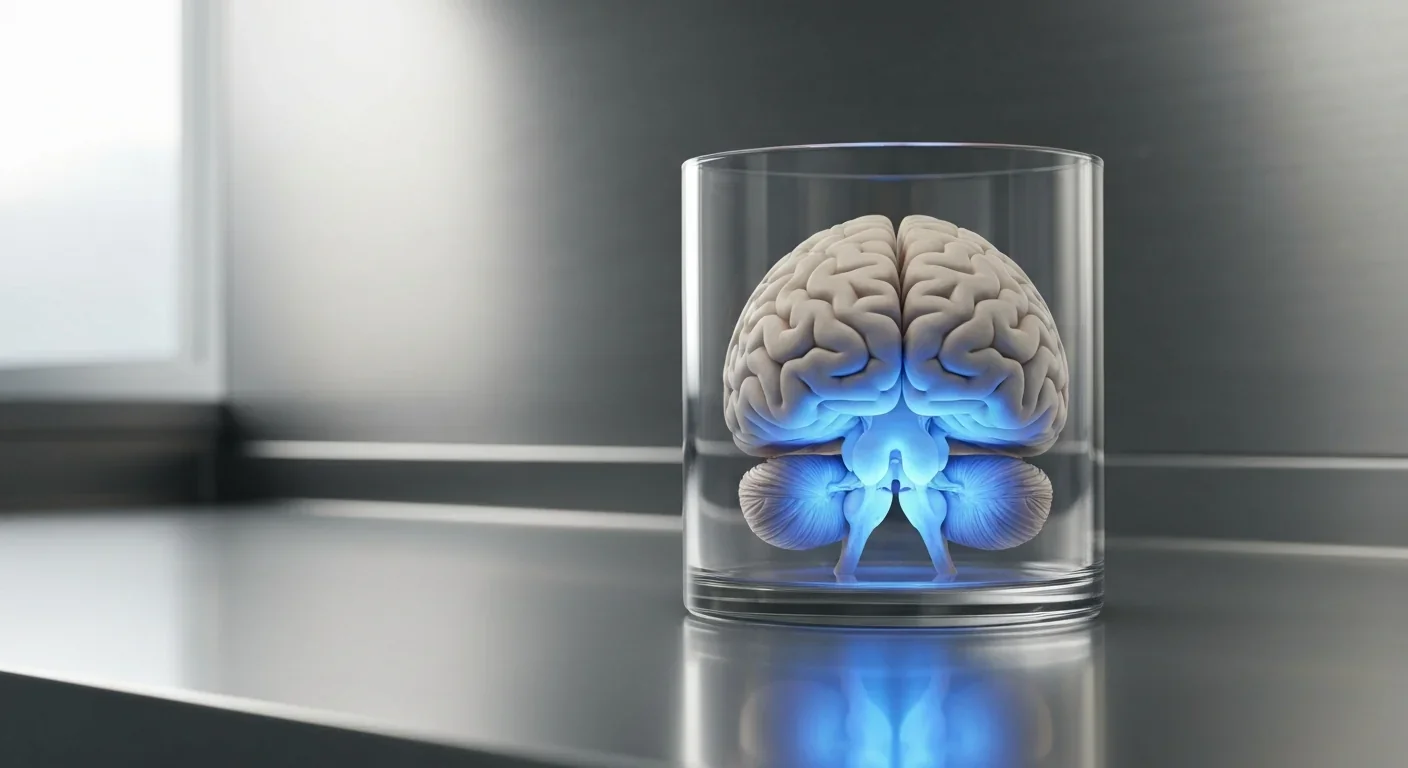
The locus coeruleus, a tiny brainstem structure, degenerates decades before Alzheimer's symptoms appear. Its loss cripples the brain's inflammation control, waste clearance, and sleep regulation. New imaging tools and noradrenergic therapies offer hope for early detection and prevention.

Research shows the sharing economy often increases total resource consumption through the Jevons paradox and rebound effects. Ride-sharing adds billions of vehicle miles, co-working spaces use more energy per worker, and diffused responsibility erodes conservation behavior. Breaking the paradox requires congestion pricing, accountability design, and matching sharing models to appropriate resource types.
Psychological reactance theory explains why banning or restricting things makes people want them more. From Prohibition to the Streisand effect to scarcity marketing, research shows that threatening people's freedom reliably backfires, and autonomy-supportive communication is far more effective.

A carnivorous pitcher plant in Borneo evolved to house bats instead of trapping insects, gaining up to 95% of its nitrogen from bat guano. The plant even built an ultrasonic reflector to help bats find it, revealing that carnivory in plants is a flexible spectrum.

The quantified self movement began as a hacker-ethos pursuit of personal insight, but corporate wearables now funnel biometric data to employers, insurers, and data brokers. With 81% of Americans wrongly believing health apps are HIPAA-protected, a regulatory void enables health data to be sold for pennies while generating anxiety instead of empowerment.

CXL memory pooling lets servers dynamically share DRAM over a cache-coherent interconnect, eliminating the 40% stranded memory waste in data centers. With commercial hardware now shipping and Azure deploying CXL cloud instances, this technology promises to cut memory costs by 50% while enabling composable infrastructure.

Loading featured articles...